
m6A-centered Crosstalk Information
Mechanism of Crosstalk between m6A Modification and Epigenetic Regulation
| Crosstalk ID |
M6ACROT05152
|
[1], [2] | |||
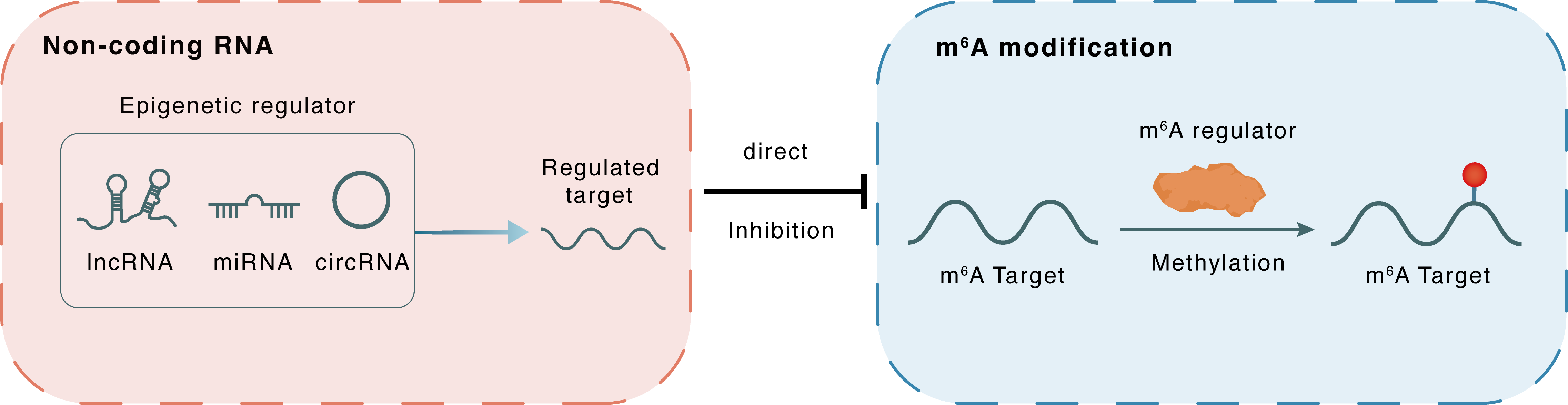 Non-coding RNA
miR-103-3p
METTL14
lncRNA miRNA circRNA
Direct
Inhibition
m6A modification
SLC2A3
SLC2A3
METTL14
Methylation
Non-coding RNA
miR-103-3p
METTL14
lncRNA miRNA circRNA
Direct
Inhibition
m6A modification
SLC2A3
SLC2A3
METTL14
Methylation
 : m6A sites : m6A sites
|
|||||
| m6A Modification: | |||||
|---|---|---|---|---|---|
| m6A Regulator | Methyltransferase-like 14 (METTL14) | WRITER | |||
| m6A Target | Solute carrier family 2, facilitated glucose transporter member 3 (SLC2A3) | ||||
| Epigenetic Regulation that have Cross-talk with This m6A Modification: | |||||
| Epigenetic Regulation Type | Non-coding RNA (ncRNA) | ||||
| Epigenetic Regulator | hsa-miR-103-3p | microRNA | View Details | ||
| Regulated Target | Methyltransferase-like protein 14 (METTL14) | View Details | |||
| Crosstalk Relationship | ncRNA → m6A | Inhibition | |||
| Crosstalk Mechanism | ncRNAs directly impacts m6A modification through modulating the expression level of m6A regulator | ||||
| Crosstalk Summary | hsa-miR-103-3p targets the m6 A methyltransferase METTL14 to inhibit osteoblastic bone formation. METTL14 promotes Solute carrier family 2, facilitated glucose transporter member 3 (SLC2A3) expression via YTHDF1, leading to the modulation of various parameters in the H2O2-induced model. Similar positive effects of METTL14 on osteogenesis were observed in an ovariectomized mouse osteoporosis model. DISCUSSION METTL14 could serve as a potential therapeutic approach for enhancing osteoporosis treatment. | ||||
| Responsed Disease | Osteoporosis | ICD-11: FB83.1 | |||
In-vitro Model |
MC3T3-E1 | Normal | Mus musculus | CVCL_0409 | |
| In-vivo Model | Female C57BL/6 mice, aged eight weeks, were selected for the study. The mice were divided into three groups with six mice per group. After intramuscular anesthesia (xylazine 10 mg/kg, ketamine 100 mg/kg), two groups underwent bilateral ovariectomy (OVX), while the remaining group had a sham operation. Ovariectomized mice were administered weekly intratibial injections of Mettl14 overexpression adenovirus containing at a concentration of 109 plaque-forming unit per injection, for a duration of 8 weeks. The mice were humanely euthanized one week after the final injection, and their tibia were gathered for further analysis. This study was approved by the ethics committee of Tongji University (NO: TJBH00823101). All the experimental methods were carried out in accordance with the approved guidelines. All experimental procedures involving mice were carried out in strict accordance with the recommendations in the ARRIVE guidelines (Animal Research: Reporting of In Vivo Experiments). | ||||
References